
October 1, 2026
The Downtown Spokane Loft Paperwork That's Newer Than the Building
Before buying a historic loft in downtown Spokane, learn why the HOA resale packet and the city's parking permit are two separate things, and why 2026 changes what's inside that packet.
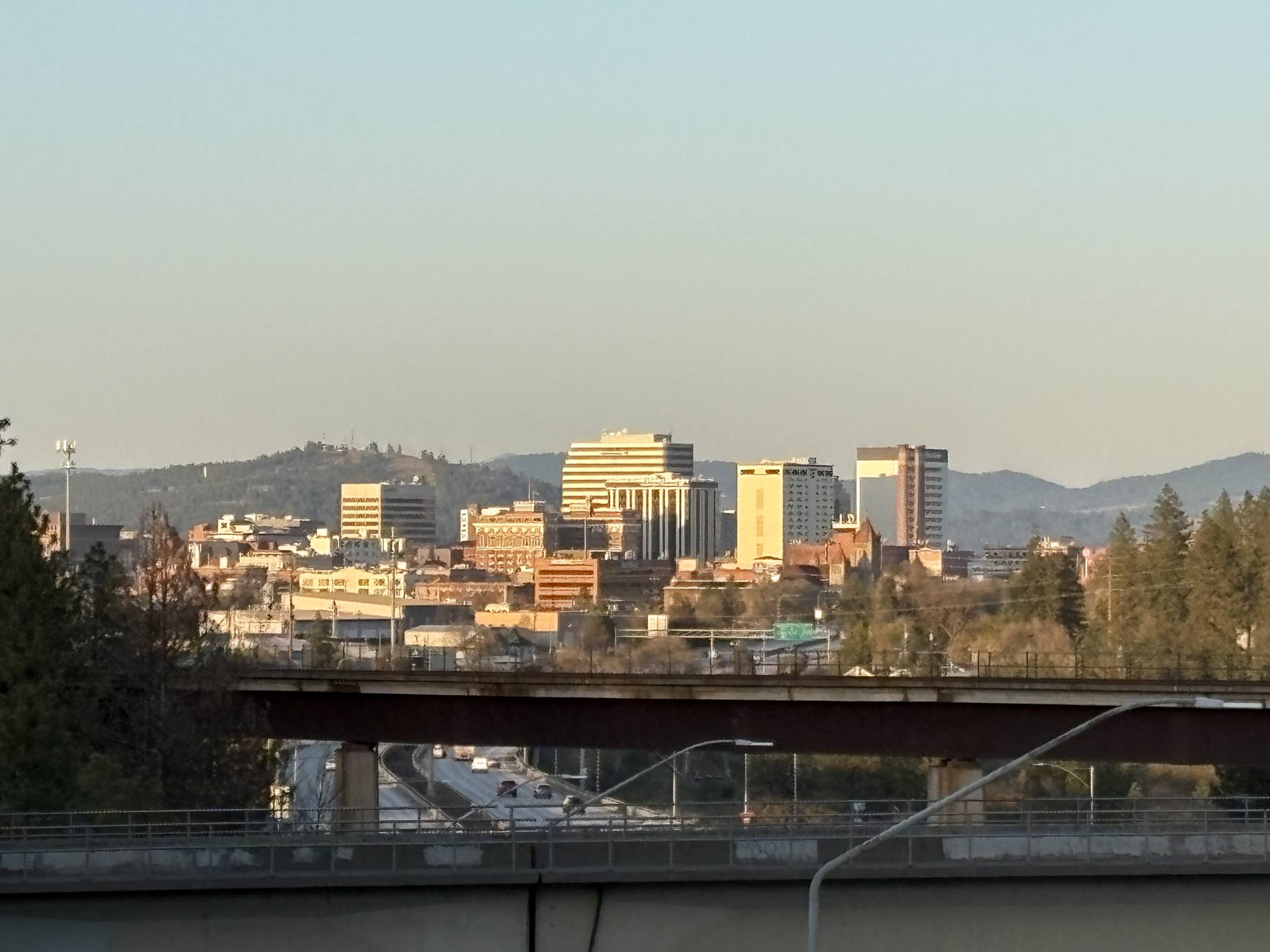
Photo: Lucasreynolds16, CC BY-SA 4.0

Ask a downtown Spokane loft owner where their car goes at night and you’ll get one of three answers. A deeded stall in the building’s basement garage. A leased space in a nearby ramp. Or a $25-a-month permit from the city that doesn’t actually promise them a spot at all.
That third answer catches more buyers off guard than anything printed in the HOA packet, because nothing in a standard purchase agreement flags which category a building falls into. You find out after closing, usually the first time you’re circling the block at 11 p.m.
A Permit, Not a Space
Spokane’s Downtown Residential Parking District exists because most of the historic buildings downtown were converted from offices, warehouses, and mills long before anyone thought to pour a resident garage. The DRPD permit costs $25 per vehicle per month and lets a resident park in an all-day paid space within their assigned zone without feeding the meter. It’s tied to a specific vehicle, a specific address, and one of five zones. It does not reserve a space. It does not cover guests. And Spokane’s DRPD guidelines require the car to move off the block face every 24 hours, which means a week out of town means finding someone to shuffle your car or paying for off-street parking anyway.
For a buyer used to a driveway, this is a different category of ownership entirely. It’s a city-administered privilege, renewed annually, not a fixed feature of the unit. If a listing doesn’t mention a deeded stall, assume you’re buying into the permit system until someone tells you otherwise in writing.
What Washington Actually Requires the Seller to Hand You
The parking question sits entirely outside the resale certificate. According to CommunityPay, Washington’s condominium statute requires sellers to deliver this packet within ten days of a request, and it has to include roughly twenty specific disclosures covering reserve fund health, pending special assessments, current insurance, association rules, and the past year of board meeting minutes. State law caps the preparation fee at $275, so the packet itself is inexpensive to obtain. Reading it is the part buyers skip.
The packet tells you whether the association can cover a new roof without asking owners for a check, whether the master insurance policy is bare-walls or comprehensive, and whether anyone is suing anyone else over a leaking envelope. None of it tells you where you park.
Why 2026 Changes What’s Inside That Packet
Here’s the part that matters more this year than it would have five years ago. Washington’s Uniform Common Interest Ownership Act, passed in 2018, originally applied only to buildings whose governing documents were filed after that date. Everything built before then ran under the older condominium statute.
That changed on January 1, 2026, when accelerated provisions from a 2025 legislative update brought every association in the state under several new requirements at once, regardless of when the building was formed. Open meetings. Documented emergency decisions. Standardized payment processing. According to HOA Organizers, full coverage phases in for every community by January 1, 2028.
For a downtown Spokane loft, this means the resale packet you receive might be thin not because the building is troubled, but because the building is old enough that formal recordkeeping is brand new to it. The Fernwell Building has stood at 505 W. Riverside since 1891. The Flour Mill went up in 1895 and didn’t even run as a mill until 1900 because of a lawsuit over ownership. The Wharton Building on West First dates to 1901 and sat as a restaurant space for decades before RenCorp Realty converted its upper floors into loft apartments in 2024, using a state incentive program new enough that the developer described it as the first building in Washington to receive that particular rebate. Each of these buildings carries more than a century of history and, in some cases, less than two years of the kind of governance paperwork WUCIOA now requires.
That mismatch is not a red flag on its own. It is simply the current state of downtown’s older housing stock, and it means the reserve study you’re handed may cover eighteen months, not eighteen years.
| Resale Packet | DRPD Permit | |
|---|---|---|
| Who issues it | The HOA or condo association | City of Spokane Parking Services |
| Typical cost | Capped at $275 to prepare | $25 per vehicle per month |
| What it covers | Reserves, assessments, insurance, minutes | One vehicle’s right to park in a zone |
| Delivery window | 10 days from request | Renews annually, available each December |
| Guarantees a space | No | No |
What This Means Before You Write an Offer
A few habits close the gap between what the paperwork promises and what you’re actually buying.
- Request the resale packet the day mutual acceptance happens, not the week before closing, so there’s time to actually read the minutes rather than skim them.
- Ask the board directly how long they’ve been keeping formal meeting records. A short answer isn’t disqualifying. It’s information about how much of the packet is projection rather than history.
- Confirm parking in writing. Deeded stall, leased garage space, or DRPD permit are three different financial commitments, and only one of them comes with the deed.
- Bring a condo-savvy inspector for the shared systems, roof, elevator, boiler, envelope, and compare what they find against the reserve balance in the packet. A gap between the two is the actual thing to negotiate on.
- Ask about the master insurance policy type before you shop your own HO-6 coverage, since a bare-walls policy shifts more cost onto individual owners than a comprehensive one.
A Few Straight Answers
If the building is over a century old, why would its financial records only go back a year or two? Because WUCIOA’s formal meeting and disclosure requirements only started applying broadly to every Washington association on January 1, 2026. A building that self-managed informally for decades may have only recently started producing the kind of documentation the law now requires.
Does WUCIOA apply to buildings built before 2018? Yes, as of 2026. It originally covered only communities formed after July 2018, but a 2025 legislative update accelerated several provisions to apply statewide this year, with full coverage phasing in by January 1, 2028.
Is a DRPD permit the same as a guest pass or general street parking? No. It’s registered to one vehicle and one address, valid only in an assigned zone, and doesn’t cover visitors. The city doesn’t offer guest permits at all, so hosting overnight guests downtown means finding them separate parking.
Downtown Spokane’s oldest buildings are some of the most interesting inventory in the city, and the paperwork gap they carry right now is a moment in time, not a permanent condition. If you’re weighing one of these units and want a second set of eyes on the resale packet, the parking situation, or how the two fit together before you write an offer, reach out to John Kennedy.
This article is general information, not legal, tax or financial advice. Consult a qualified professional about your situation.